![[Translate to English:]](/fileadmin/_processed_/a/b/csm_PHD_AWARDS_2025_TEASER-BILD_e2f91854f6.jpg "[Translate to English:]")
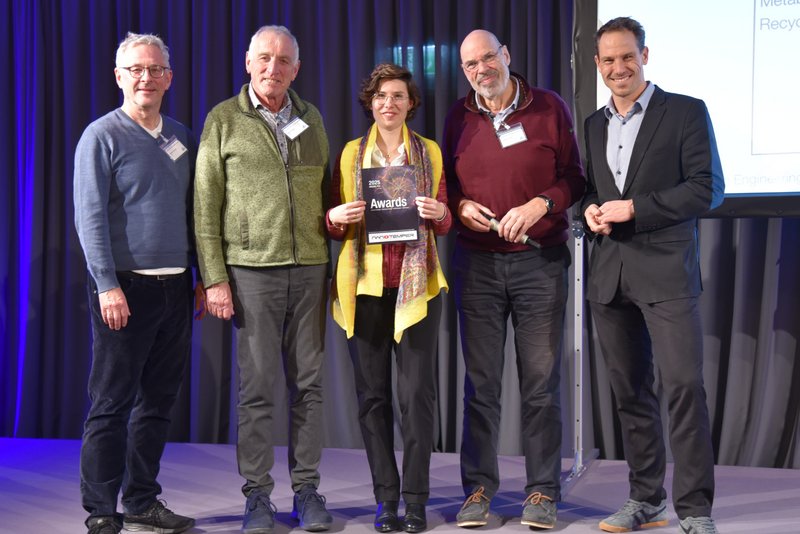
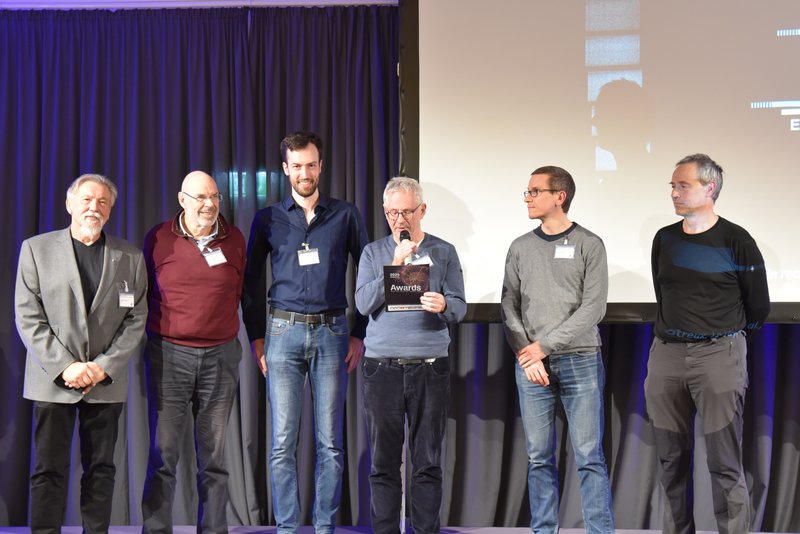
The ORIGINS PhD Awards are presented annually for outstanding doctoral theses in the fields of astrophysics, nuclear and particle physics, and biophysics. The selection committee, comprised of our Cluster Emeriti, faced the difficult task of choosing two from seven excellent dissertations whose scientific quality and scope in exploring the origins of life in the universe were particularly noteworthy. The two PhD prizes, each worth €2,000, were made possible by a donation from NanoTemper GmbH.
Library of Synthetic Life
Dr. Christine Kriebisch's dissertation,"Chemically Fueled Dynamic Combinatorial Libraries Towards Synthetic Life,“ deals with combinatorial libraries of substances in which molecules constantly reassemble, dissociate, and occur in different combinations. Until now, equilibrium reactions had to take place within these libraries, with molecules forming and dissociating again in short periods. Christine Kriebisch has succeeded in introducing the concept of chemical propulsion for these libraries of substances, enabling reactions to occur far outside of equilibrium through the conversion of chemical fuel. This makes it possible to mimic processes that may have been crucial for the origin of life. Christine Kriebisch was able to show that such chemical libraries actually develop properties reminiscent of biological selection. In a further step, she combined these systems with RNA-like strands and demonstrated that these rapidly combine with free nucleobases to form stable double strands. "The work contains groundbreaking scientific contributions, has a strong influence on the field of systems chemistry and will open up new avenues for the synthesis of artificial life in the laboratory," the selection committee emphasized.
Geothermal energy meets prebiotic chemistry
Dr. Thomas Matreux's dissertation, "Geothermic Microfluidic Systems Foster Prebiotic Chemistry“ focuses on how complex prebiotic chemical processes could develop and thrive under the harsh conditions of early Earth. It addresses three interdisciplinary puzzles in non-equilibrium physics, geosciences, and prebiotic chemistry: How can multi-stage prebiotic chemistry remain focused? Where does the phosphorus required for prebiotic chemistry come from? And which habitats offer optimal conditions for RNA and prebiotic chemistry? Through theoretical studies and laboratory experiments, Thomas Matreux discovered that heat flows hold the key to these questions: Heat flows, such as those found in nature in rock fractures, can transport substances, allowing them to accumulate and enrich prebiotic building blocks with new elements. The selection committee agreed: “The synthesis of experiment and theory, which integrates chemistry, geosciences and physics into a holistic view of the origin of life, is unique worldwide in this field and will be exemplary for how research into the origin of life should be conducted.”
