10/27/2023 ORIGINS physicist Prof. Johannes Henn has been awarded the prestigious European Research Council Synergy Grant for a project at the interface of particle physics, cosmology and mathematics.
more
10/25/2023 Cluster Emeritus Prof. Dr. Andrzej J. Buras from the Technical University of Munich will receive the Sakurai Prize (official name: J. J. Sakurai Prize for Theoretical Particle Physics). The prize is one of the most prestigious awards in theoretical particle physics. The Sakurai Prize will be awarded by the American Physical Society at its annual meeting from 3 to 6 April 2024 in Sacramento, California, and honors outstanding achievements in particle physics theory.
more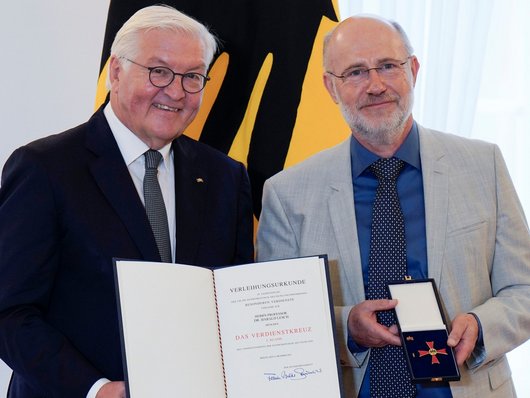
10/16/2023 ORIGINS scientist and science journalist Harald Lesch has been awarded the Order of Merit of the Federal Republic of Germany.
more
09/15/2023 The LMU astrophysicist and ORIGINS scientist has won the award for his modeling of dust traps in protoplanetary disks, solving a long-standing puzzle in planet formation.
more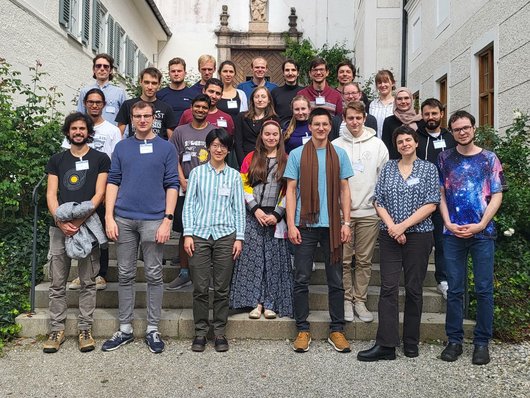
09/07/2023 For the third time, the PhD students of the Cluster of Excellence ORIGINS met within the framework of the PhD Days 2023. During the three-day workshop at the end of August in the Seeon monastery, 26 young researchers exchanged ideas about their research in stimulating discussions. The meeting was organized and planned by ORIGINS PhD Representatives Asmaa Mazoun (TUM) and Leonard Romano (LMU).
more
08/09/2023 Lukas Heinrich, who heads the ORIGINS Data Science Laboratory (ODSL) at the ORIGINS Cluster as Professor of Data Science in Physics, was interviewed as part of the TUM series "NewIn". With his team, he develops new methods to discover new elementary particles in huge amounts of data.
more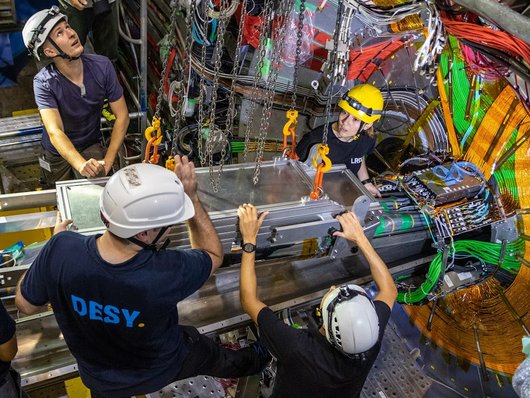
08/03/2023 The pixel vertex detector, which is about the size of a soda can and is the innermost sub-detector of the international experiment Belle II, has been successfully installed at its final location at the SuperKEKB electron–positron collider at the KEK laboratory in Japan. The device, which is designed to detect the signals of certain particle decays that could shed light on the origin of the observed imbalance of matter and antimatter in the universe, has ventured a long way over a long time from its production site in Munich to its final destination in Japan.
more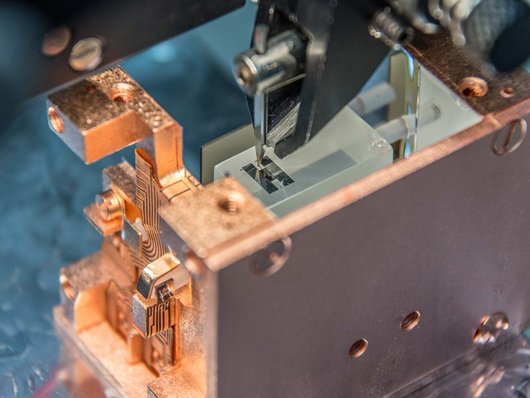
07/27/2023 The CRESST experiment has specialized in the search for light dark matter particles, lighter than 1 Gigaelectronvolts (1 GeV). In order to reliably measure the tiny energy released by these particles in the detectors, those must be very precisely tuned. The scientists involved in CRESST are now successfully exploiting a new calibration method for this purpose.
more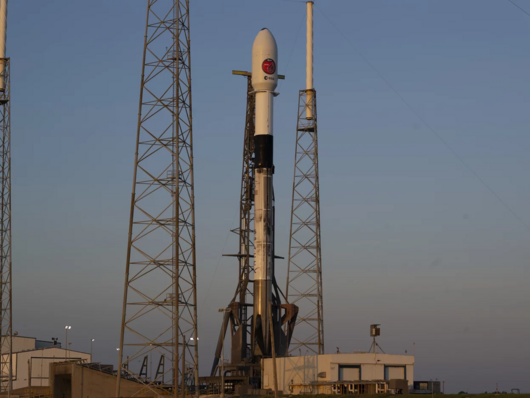
07/03/2023 The ESA space telescope Euclid, with significant contributions by ORIGINS scientists at the Max Planck Institute for Extraterrestrial Physics (MPE) in Garching, was launched into space today, 1 July 2023 at 17:12 CEST on a Falcon 9 rocket by the US space company SpaceX. Once it arrives at its destination, the Lagrange Point 2 (L2) of Earth-Sun system, it will observe over a third of the entire sky for at least six years, mapping the spatial distribution of billions of galaxies and measuring their properties. Analysing this data, the six German institutes in the…
more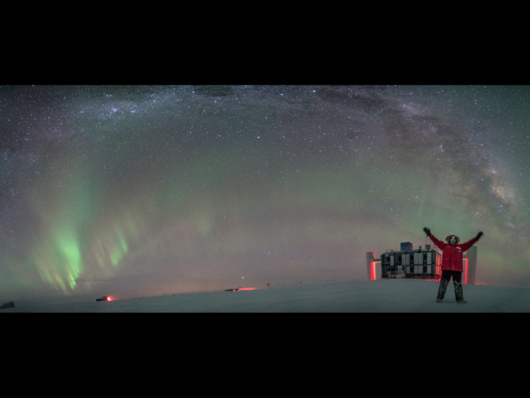
06/29/2023 For the first time, the scientists of the international IceCube Collaboration have succeeded in detecting neutrinos from the Milky Way. The analysis of ten years of observation data using machine learning methods led to the success for which ORIGINS scientist Elisa Resconi's group at the Technical University of Munich provided important preliminary work. In the next step, the researchers strive to understand from which celestial objects the observed high-energy neutrinos come.
more