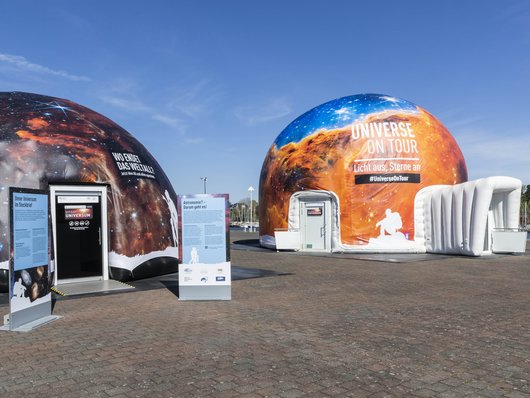
06/29/2023 „Universe on Tour“ stoppt vom 05. bis 09. Juli 2023 in München. Im Rahmen der bundesweiten Roadshow im Wissenschaftsjahr 2023 – Unser Universum präsentieren das Bundesministerium für Bildung und Forschung und Münchner Forschungsinstitute in einem 75 Quadratmeter großen mobilen Planetarium aktuelle Themen im Bereich Astronomie und Astrophysik. Mit dabei: der Exzellenzcluster ORIGINS, die Universitäts-Sternwarte München (LMU), die Max-Planck-Institute für Physik, für extraterrestrische Physik und für Astrophysik, die Europäische Südsternwarte ESO und die Volkssternwarte…
more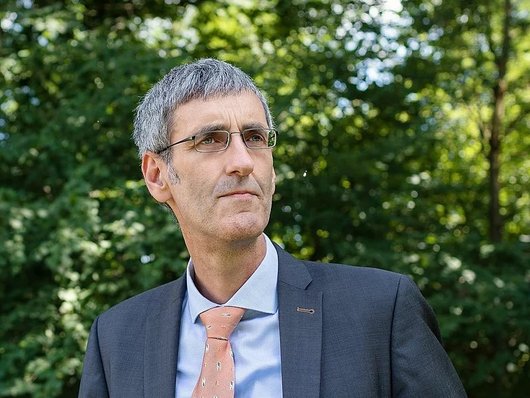
05/31/2023 The astrophysicist and ORIGINS scientist Frank Eisenhauer builds sophisticated instruments for the world’s largest telescopes and uses them to explore black holes and distant galaxies with unprecedented precision.
more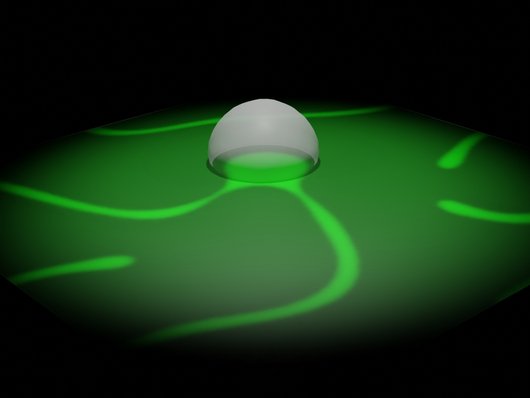
05/22/2023 Researchers at the ORIGINS Cluster from statistical and biological physics have constructed a new cell-like transport system and thus made important progress on the way to the artificial cell.
more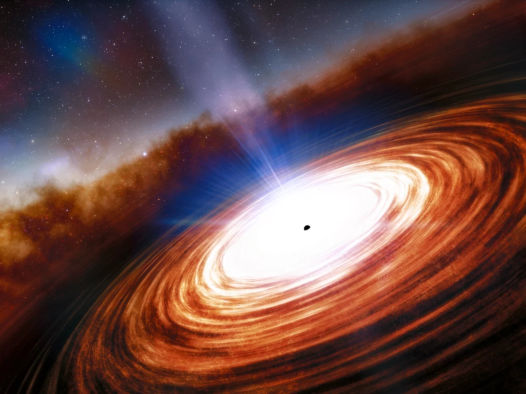
05/21/2023 Researchers of the ORIGINS Cluster have observed the X-ray emission of the most luminous quasar seen in the last 9 billion years of cosmic history. Significant changes in the quasar’s emission give a new perspective on the inner workings of quasars and how they interact with their environment. The study was led by Dr Elias Kammoun, a postdoctoral researcher at the Research Institute in Astrophysics and Planetology (IRAP), and Zsofi Igo, an ORIGINS PhD candidate at the Max Planck Institute for Extraterrestrial Physics (MPE).
more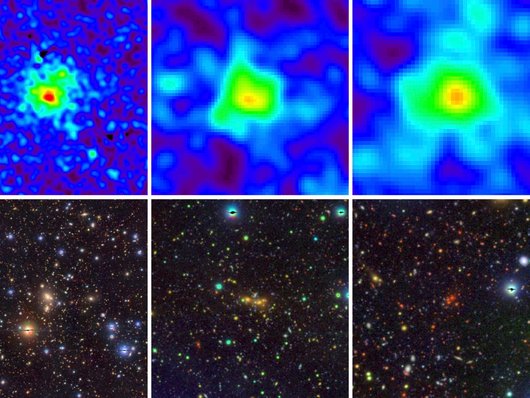
05/14/2023 Measurements show that the universe is expanding faster and faster. Where this accelerated expansion comes from, however, is a mystery. A first investigation of the dark energy with the X-ray telescope eROSITA by ORIGINS scientists now provides indications that this is evenly distributed in space and time.
more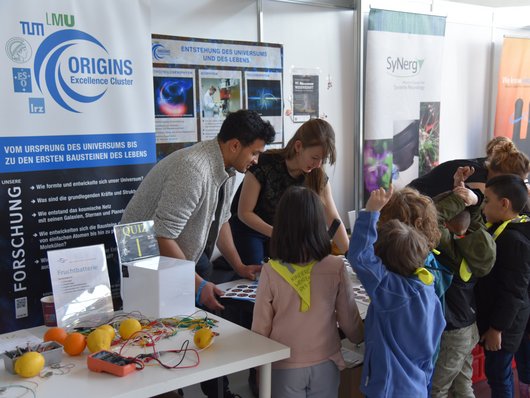
05/09/2023 From May 5th to May 7th, 2023 he Munich Science Days offered visitors exciting insights into the world of research at FORSCHA. ORIGINS was there and inspired with findings from astrophysics, particle physics and biophysics.
more
04/12/2023 For the fifth time, the Excellence Cluster ORIGINS awards two outstanding dissertations in the field of astro-, nuclear and particle physics as well as biophysics. Interdisciplinary thesis topics addressing one of the important milestones of the cluster and connecting various research disciplines will be preferred. The application deadline is 15 July 2023.
more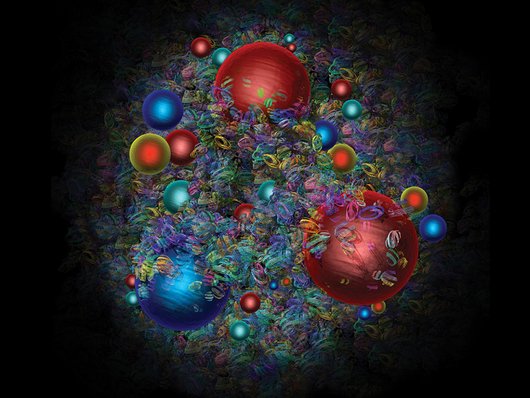
04/07/2023 The proton is one of three building blocks of the atom. Together with neutrons and electrons it forms the matter we know. Since the 1960s, we have known that a proton consists of three quarks. However, researchers now have a much more differentiated picture of the familiar particle. A small team at the Max Planck Institute for Physics (MPP) used the ORIGINS Data Science Lab (ODSL) to reanalyse data from the ZEUS experiment with novel statistical methods. Like this they obtained much more precise analysis results.
more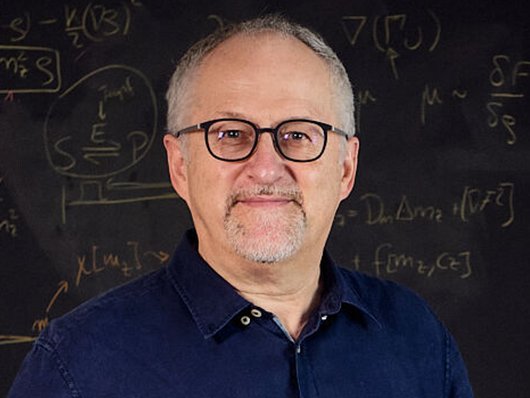
03/31/2023 The European Research Council (ERC) awards Professor Erwin Frey an Advanced Grant for his project "CellGeom" (The geometrical and physical basis of cell-like functionality). Frey holds the Chair for Statistical and Biological Physics at the Faculty of Physics at the Ludwig-Maximilians-University Munich and is at the ORIGINS Cluster the Coordinator of Connector 8 (CN-8), Emergence of Complex Structures and Non-Equilibrium Physics.
more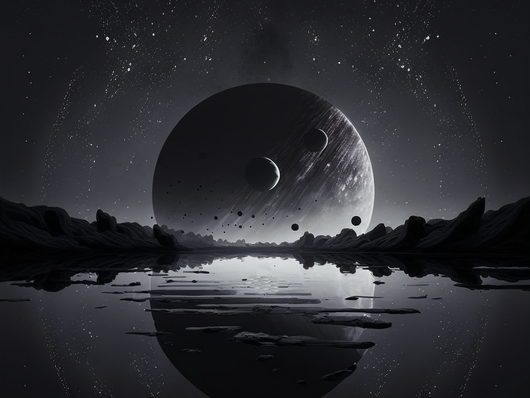
03/15/2023 Liquid water is one of the most important ingredients for the emergence of life as we know it on Earth. Researchers of the ORIGINS Cluster from the fields of astrophysics, astrochemistry and biochemistry have now determined in a novel, interdisciplinary collaboration the necessary properties that allow moons around free-floating planets to retain liquid water for a sufficiently long time and thus enable life.
more