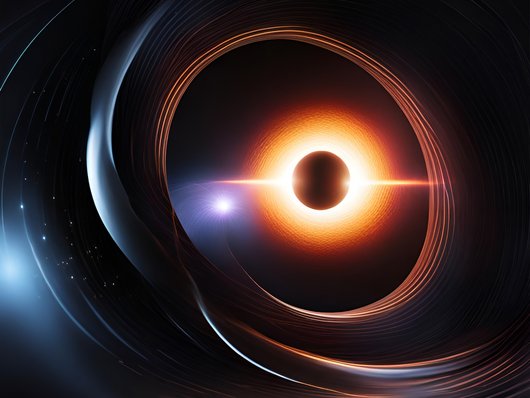
Gleich nach dem Urknall könnten sich im jungen Universum winzige Schwarze Löcher gebildet haben. Diese urzeitlichen Objekte – erstmals 1971 von Stephen Hawking vorgeschlagen – stehen heute wieder verstärkt im Fokus astrophysikalischer Forschung. Vielleicht durchziehen diese sogenannten primordialen Schwarzen Löcher noch immer das gesamte Universum, möglicherweise sogar unser Sonnensystem. Und…
more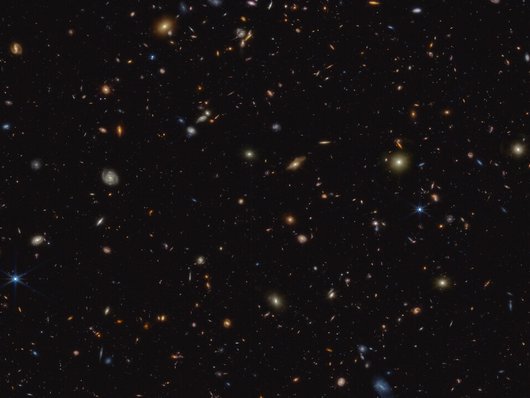
Die allerersten Sterne im Universum sind für die moderne Astronomie von zentraler Bedeutung. Ohne sie gäbe es im Weltall nur Wasserstoff und Helium. Die ganze Vielfalt der Elemente, wie wir sie heute kennen, und sogar das Leben wären ohne sie undenkbar. Denn im heißen Inneren von Sternen können Wasserstoff und Helium, die beiden leichtesten Atomsorten, die bereits im Urknall entstanden sind, zu…
more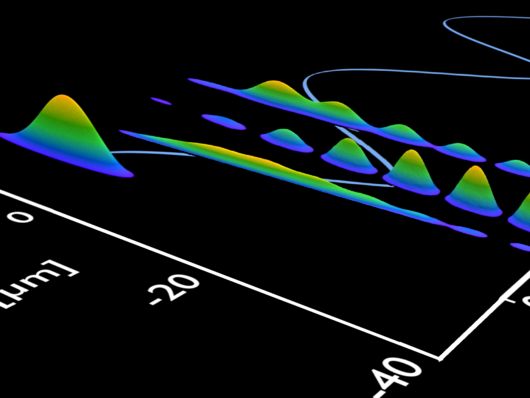
Warum fallen Dinge eigentlich nach unten? Diese scheinbar einfache Frage beschäftigt die Menschheit seit über zweitausend Jahren. Schon Aristoteles entwickelte eine geometrische Theorie dazu, später beschrieb Isaac Newton die Gravitation als eine anziehende Kraft zwischen Massen. Albert Einstein revolutionierte schließlich unser Verständnis mit seiner Allgemeinen Relativitätstheorie: Gravitation…
more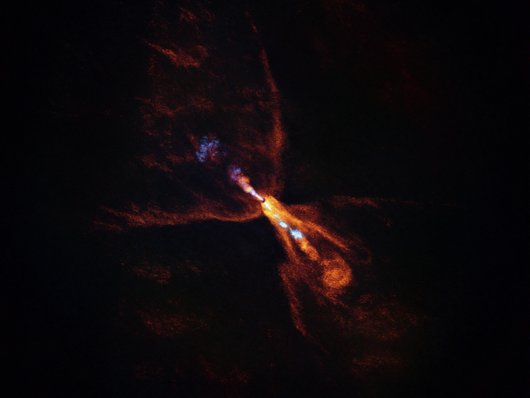
In this Kosmisches Kino, Dr. Asmita Bhandare from the Ludwig-Maximilians-Universität München (LMU) takes us to the breathtaking birthplaces of star systems. She will unveil how baby stars are born and how material assembles around them to build the cradle of future planets.
more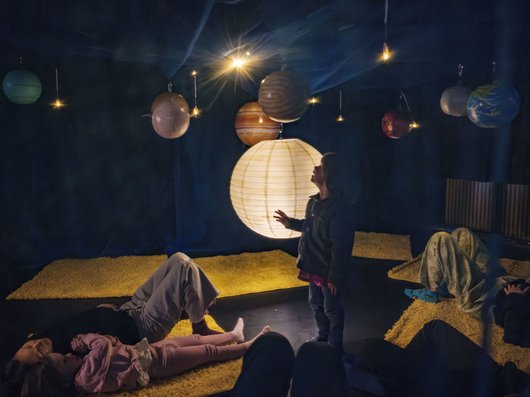
Von Moosach ins Weltall und wieder zurück: Das Mitmach-Tanztheater der Choreographin Marie Nüzel und des ORIGINS-Astrochemikers Dr. Alexander Ruf (LMU) lädt kleine Astronautinnen und Astronauten ab 5 Jahren auf eine Entdeckungsreise ein.
more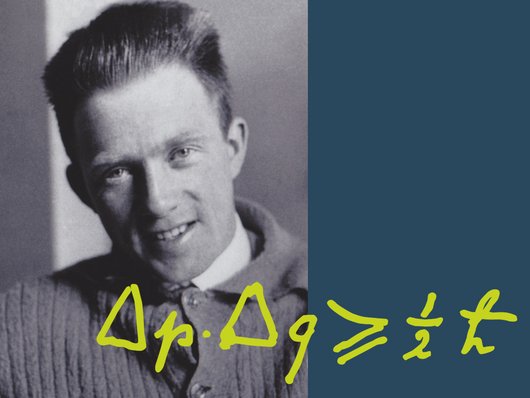
Vor 100 Jahren revolutionierten Physiker wie Heisenberg, Schrödinger und Born mit der Begründung der Quantenmechanik grundlegend unser Verständnis von Physik. Denn obwohl die Quantenwelt oft unserer Alltagsintuition widerspricht, ist sie bis heute für die Beschreibung der Realität relevant.
Noch heute finden sich ihre Prinzipien in der aktuellen Physik: Vom Verständnis der elementaren…
more
Die Frage „Wo kommen wir her?” gehört zu den Urfragen der Menschheit. Die moderne Kosmologie beantwortet sie mit dem Urknall, der vor 13,82 Milliarden Jahren zur Entstehung des Universums führte. Im Urknall entstand der Urbaustein der Materie: Wasserstoff. In den heißen Zentren der Sterne bildeten sich dann aus dem Wasserstoff schwerere Elemente wie Kohlenstoff, Stickstoff und Sauerstoff, die…
more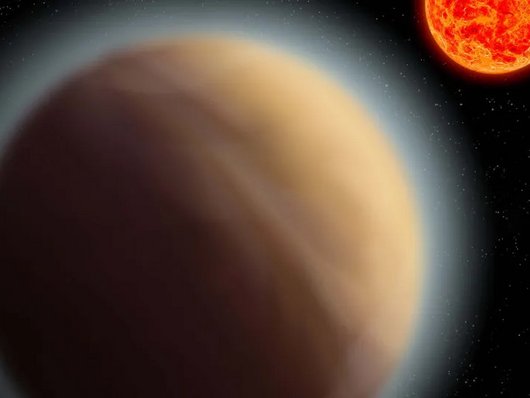
In this Kosmisches Kino, David Cont from the LMU University Observatory will take us into the fascinating world of exoplanets and show how observations with the large telescopes in Chile are helping to decipher the conditions in their atmospheres.
more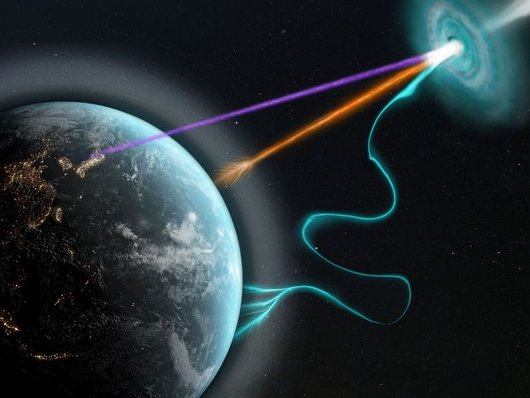
In this Kosmisches Kino, Francesca Capel from the Max Planck Institute for Physics (MPP) takes us on a journey into the world of the most accomplished space travellers: cosmic particles. She will show us what cosmic rays are, where they come from, and what messages they carry to us from the depths of the Universe.
more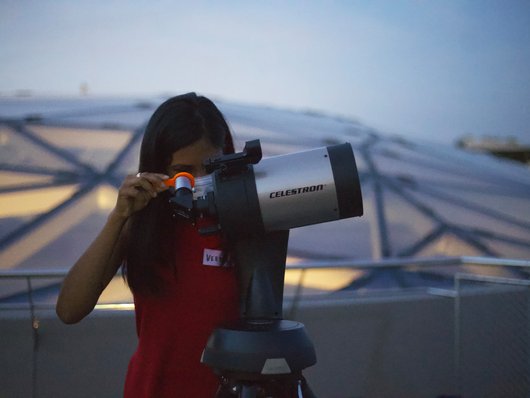
On Saturday, September 13, the ESO Supernova will participate in the nationwide Long Night of Astronomy and will be offering various special programs from 6:30 p.m. to 11:00 p.m. Researchers from the ORIGINS cluster will also be present, answering questions in the exhibition and, weather permitting, conducting live observations with the telescopes on the roof terrace.
more